Marketplace or Reimbursement? How to Spend Utah Fits All Money Without Losing It
By My Learning Source · October 19, 2026 · Scholarships, Guides, Tips

You have the award. Now comes the part that decides whether the money actually works for you: how you spend it.
There are two paths. They are not equally easy, and most families should be using the first one far more than they do.
Path one: the Odyssey Marketplace
Your award sits in an Odyssey Wallet. Inside the Odyssey Marketplace you shop approved vendors, and Odyssey pays those vendors directly. You never front money. You never chase a reimbursement.
The advantages are not subtle:
- No cash out of your pocket, ever.
- The offering has already been reviewed for eligibility. You are not guessing whether it counts.
- No receipt submission, no proof-of-payment upload, no back and forth.
The disadvantage is simple too: if the thing you want isn't in there, it isn't in there. Vendor lists grow, but they are never everything.
Path two: buy elsewhere, submit for reimbursement
You pay out of pocket at a store, a local tutor, a gym. Then you submit an itemized receipt plus proof of payment. Two documents. Both required. This is where claims die.
An itemized receipt lists what you bought, line by line, with prices. A credit card slip showing "
Families submit one and wonder why nothing happens. Submit both. Every time. Without exception.
The 10% comparison rule
This is the rule that surprises people. Out-of-Marketplace reimbursement is limited to 10% above a comparable Marketplace item.
Plain version: if the same or equivalent product sits in the Marketplace at
The practical takeaway is not "never buy outside." It's "check the Marketplace price first." Thirty seconds of looking tells you whether the outside purchase is going to clear at full value or come back trimmed.
The Hadleys in St. George found the edge of this rule on a science curriculum. Ken had bought the set from a publisher he'd used for years, at a price that seemed fine. The comparable Marketplace listing was noticeably cheaper. The reimbursement did not match what he paid, and the gap came out of the family budget.
(A composite example — names and details are illustrative, drawn from situations homeschool families commonly describe.)
He wasn't doing anything wrong. He just didn't look first.
The eligibility question — ask before you buy
If you are not sure a purchase counts, ask before you spend, not after. The program's handbook includes a process for submitting an eligibility request on a specific item or service. Use it on anything unusual, anything expensive, and anything that sits near a category line.
Near a category line means things like: a family membership that includes classes, a piece of equipment that is also recreational, a travel-team fee that mixes instruction and competition, a device accessory bundled with a laptop. You will have a theory about which category it falls in. Your theory is not the one that counts. The program's expense guidance is, and it is published — read the official Eligible Expense Guide and ask when it doesn't answer you.
The ,000 review
Goods over
,000 get extra review. That is not a denial. It is a slower yes — or a slower no, which is worse if you were counting on it.
So do the big purchase early. A laptop bought in late July has weeks of runway. The same laptop bought June 10 is a gamble against the end of the program year.
Remember the device cap too: computers, tablets and printers are capped at
,500 each, with quantity limits. A ,000-plus purchase and a ,500 cap live very close together, which means most real device purchases hit both rules at once.
The July 1 wall
Spending before July 1 of the program year is not reimbursed. The exception is private school tuition and deposits.
This is the single most common way Utah families waste money on this program. Spring curriculum sales are in April and May. The award notice for 2026-27 went out June 16, 2026. Funds were released July 15, 2026. If you bought in May holding an award letter you didn't yet have, it doesn't matter — the receipt is outside the program year.
Want the spring sale price? Pay with household money and treat it as household spending. Don't submit it.
When to use which path
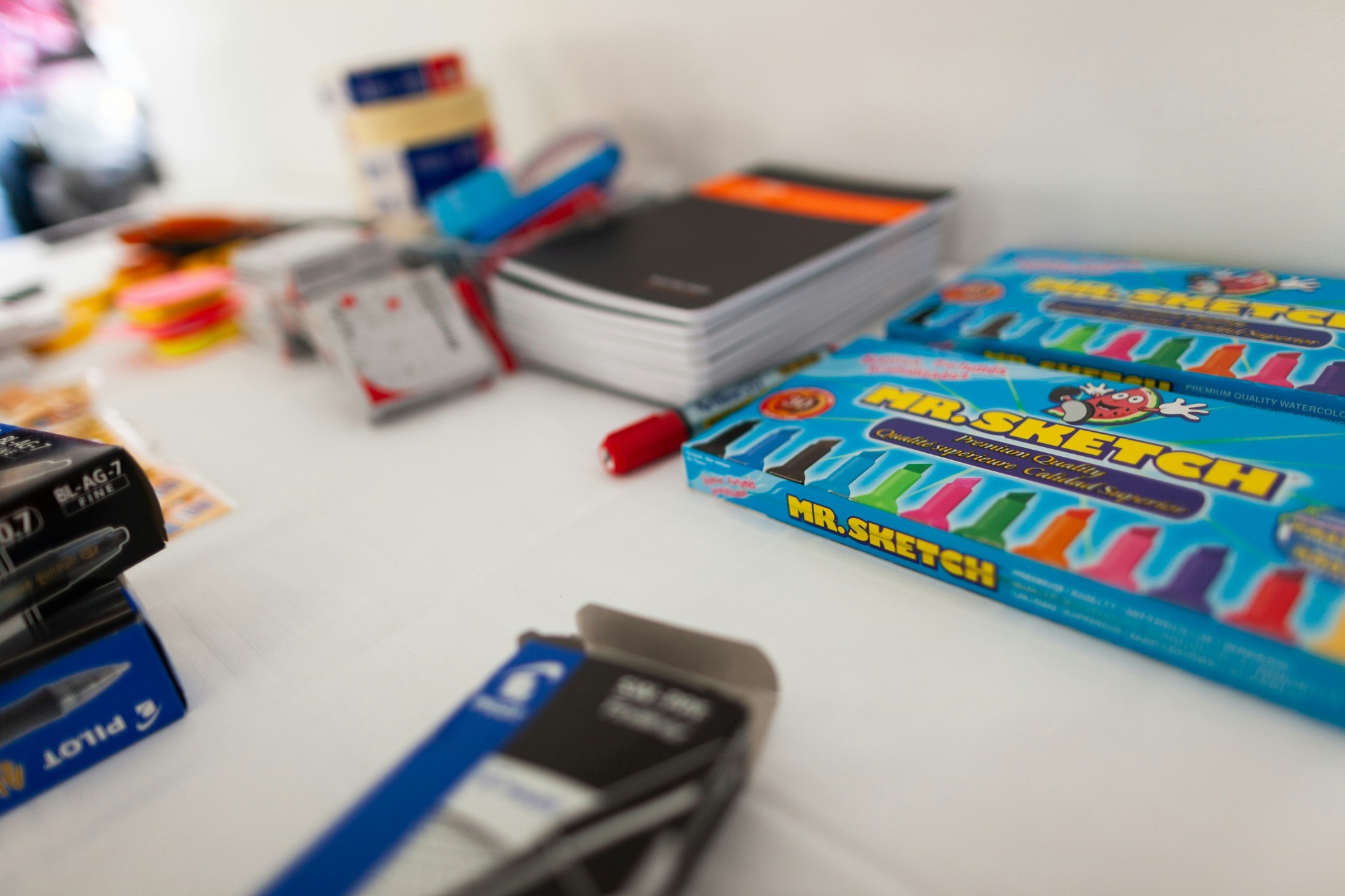
- Use the Marketplace for anything you can find there. Curriculum, software, supplies, big-name providers. It is faster, it is safer, and it costs you no float.
- Use reimbursement for the local piano teacher, the small gym, the regional co-op, the specialist therapist — the people who make your program work and who may not be listed.
- Nudge your local providers to register. Vendors apply through the Odyssey vendor portal. A tutor who gets approved stops being a reimbursement headache and becomes a direct-pay line item. Send them the link. Many small Utah businesses simply don't know the option exists.
A receipt system that takes two minutes a week
- One digital folder per program year, named by year.
- Photograph every receipt the day you get it. Paper fades — thermal receipts from a Utah car in August fade fast.
- Save the itemized receipt and the payment proof together, as a pair, named the same way.
- Log the date, the vendor, the amount and the category the same day. Categories matter because of the 20% caps on extracurriculars and PE — you need a running total, not a surprise in February.
- Submit monthly. Don't stockpile submissions for June.
What denials usually come down to
In practice, the recurring causes are boring: a non-itemized receipt, a missing proof of payment, a purchase dated before July 1, a price well above a Marketplace comparable, a category already maxed at 20%, or an item that was never eligible in the first place. Almost every one of those is preventable with a check before you buy.
Bottom line
Default to the Marketplace. When you go outside it, check the comparable price, keep both documents, watch the calendar, and ask about anything unusual before your money leaves the account.
Our Utah Fits All guide walks through the rules in more detail, and you can browse Utah providers on our vendor directory — then confirm current approval status in the official Marketplace before you spend a dollar.
My Learning Source is an independent marketplace and is not affiliated with the Utah State Board of Education, Odyssey or the Utah Fits All Scholarship Program. Program rules and amounts are set by the state and can change — confirm details on the official program pages before making financial decisions. Family examples are composites, not real individuals.
More from the marketplace
- Idaho's Parental Choice Tax Credit in Plain English: Who Qualifies, What It Pays and How It Works — My Learning Source, October 19, 2026
- Alaska Correspondence Allotments in Plain English: What They Are, Who Gets Them and How They Work — My Learning Source, October 19, 2026
- California's Four Legal Ways to Homeschool, Compared: Affidavit, PSP, Credentialed Tutor or Charter — My Learning Source, October 19, 2026
- South Carolina's Education Scholarship Trust Fund in Plain English: Who Qualifies, What It Pays, How It Works — My Learning Source, October 19, 2026
- Find homeschool vendors — tutoring, curriculum, therapy, STEM, arts and enrichment
Loading the full experience… If it does not appear, this article is fully readable above.
Goods over
So do the big purchase early. A laptop bought in late July has weeks of runway. The same laptop bought June 10 is a gamble against the end of the program year.
Remember the device cap too: computers, tablets and printers are capped at
The July 1 wall
Spending before July 1 of the program year is not reimbursed. The exception is private school tuition and deposits.
This is the single most common way Utah families waste money on this program. Spring curriculum sales are in April and May. The award notice for 2026-27 went out June 16, 2026. Funds were released July 15, 2026. If you bought in May holding an award letter you didn't yet have, it doesn't matter — the receipt is outside the program year.
Want the spring sale price? Pay with household money and treat it as household spending. Don't submit it.
When to use which path
- Use the Marketplace for anything you can find there. Curriculum, software, supplies, big-name providers. It is faster, it is safer, and it costs you no float.
- Use reimbursement for the local piano teacher, the small gym, the regional co-op, the specialist therapist — the people who make your program work and who may not be listed.
- Nudge your local providers to register. Vendors apply through the Odyssey vendor portal. A tutor who gets approved stops being a reimbursement headache and becomes a direct-pay line item. Send them the link. Many small Utah businesses simply don't know the option exists.
A receipt system that takes two minutes a week
- One digital folder per program year, named by year.
- Photograph every receipt the day you get it. Paper fades — thermal receipts from a Utah car in August fade fast.
- Save the itemized receipt and the payment proof together, as a pair, named the same way.
- Log the date, the vendor, the amount and the category the same day. Categories matter because of the 20% caps on extracurriculars and PE — you need a running total, not a surprise in February.
- Submit monthly. Don't stockpile submissions for June.
What denials usually come down to
In practice, the recurring causes are boring: a non-itemized receipt, a missing proof of payment, a purchase dated before July 1, a price well above a Marketplace comparable, a category already maxed at 20%, or an item that was never eligible in the first place. Almost every one of those is preventable with a check before you buy.
Bottom line
Default to the Marketplace. When you go outside it, check the comparable price, keep both documents, watch the calendar, and ask about anything unusual before your money leaves the account.
Our Utah Fits All guide walks through the rules in more detail, and you can browse Utah providers on our vendor directory — then confirm current approval status in the official Marketplace before you spend a dollar.
My Learning Source is an independent marketplace and is not affiliated with the Utah State Board of Education, Odyssey or the Utah Fits All Scholarship Program. Program rules and amounts are set by the state and can change — confirm details on the official program pages before making financial decisions. Family examples are composites, not real individuals.
More from the marketplace
- Idaho's Parental Choice Tax Credit in Plain English: Who Qualifies, What It Pays and How It Works — My Learning Source, October 19, 2026
- Alaska Correspondence Allotments in Plain English: What They Are, Who Gets Them and How They Work — My Learning Source, October 19, 2026
- California's Four Legal Ways to Homeschool, Compared: Affidavit, PSP, Credentialed Tutor or Charter — My Learning Source, October 19, 2026
- South Carolina's Education Scholarship Trust Fund in Plain English: Who Qualifies, What It Pays, How It Works — My Learning Source, October 19, 2026
- Find homeschool vendors — tutoring, curriculum, therapy, STEM, arts and enrichment
Loading the full experience… If it does not appear, this article is fully readable above.